Anagarika Darmapala Mawatha, Matara.
 041 22 22 983
 SL
SLThe History of Matara Bodhi Arakshaka Sabawa
As one enters the city of Matara, an awe-inspiring sight immediately captures the eyes, instilling a profound sense of limitless devotion and reverence toward the Supreme Buddha, the Great Awakened One. This is the Historic Matara Bodhi Tree, standing amidst a tranquil and serene environment in the heart of the bustling city—a silent testament to a historical legend dating back as far as 515 AD.
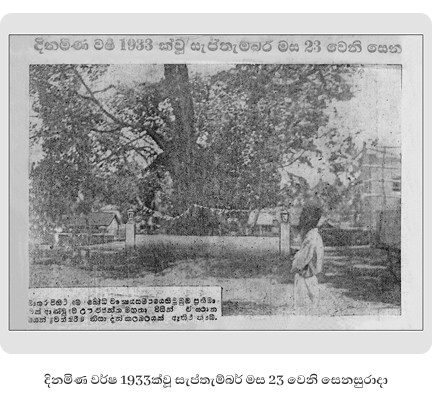
Ancient chronicles and folklore confirm that the site possesses a historical background tracing back to the reign of King Kumaradasa (515 AD), who is celebrated as a great royal poet of this land. Botanical research has revealed that the Historic Matara Bodhi Tree belongs to the same lineage as the Jaya Sri Maha Bodhi in Anuradhapura.
It is mentioned that during the planting of this Bodhiraja (Sacred Bodhi Tree), seven individuals—including King Kumaradasa, five queens who committed suicide by leaping into the funeral pyre of the great poet Kalidasa (who had arrived in Sri Lanka as a state guest upon the King's invitation and met a tragic fate), and the scholars who advised the King—all sacrificed their lives.
To commemorate this tragedy, seven Bodhi trees were planted within the town of Matara, and since then, this location has been known as "Hath Bodhi Watta" (The Garden of Seven Bodhi Trees). The Historic Matara Bodhi Rajaya is believed to be one of those sacred Bodhi trees.
The British rulers of the time posed various threats to this historic sacred ground. With the intention of expanding the Matara Municipal premises and teaching a lesson to the Buddhists, they even scheduled a date to cut down and remove this Bodhi Tree.
However, the Buddhist businessmen, government officials, and officers of the Matara Municipal Council, along with other Buddhist devotees of that time, united to protect it with great difficulty amidst various threats and intimidations.
Under their leadership, they arranged for a Buddha Statue to be placed before the Bodhi Tree for worship, andto enhance its sanctity, they constructed a small image house, a small Stupa (Chaitiya), and two Devalayas. The small Stupa that was originally built can still be seen behind the Vihara Mandiraya today.
Among the members of the Matara Bodhi Arakshaka Arakshaka Sabawa, the late Mr. B. Ariyaratne, Mr. B.A. Simon Appuhamy, and Mr. K.P. Karunelis were among those who took the lead. In 1961, Mr. K.T. Somapala, Mr. C.A. Dharmasena, and Mr. R. Pelis commenced the construction of a Stupa through their personal wealth and donations.
To ensure the future existence and protection of the gradually developing Matara Bodhi Rajaya, the Matara Bodhi Protection Council was established on October 19, 1962.
Mr. Edmund Samarasekera was appointed as the first President of the Matara Bodhi Arakshaka Sabawa, and he held that position continuously for 17 years until 1978, performing an impeccable and immortal service for the upliftment of the Bodhi Rajaya.
Following his demise, Mr. Henry Gunasekera, Mr. C.A. Hemachandra, Mr. Richard Kulatunga (Attorney-at-Law), Mr. S.K. Chandrasoma, Mr. Amaradasa Kumanayake, Mr. Dihan Samarasekera, and Mr. Rohantha Samarasinghe were appointed respectively, and the current President is Mr. Thilak Jayasekera.
It must be mentioned with great praise that he, sacrificing his time, wealth, and labor without any financial benefit, and driven by national and religious sentiment, performs a noble national, religious, and social mission for the country, society, and the Sambuddha Sasana through his work for the upliftment of this sacred site.

Sed ut perspiciatis unde omnis iste natus error sit voluptatem accusantium doloremque laudantium, totam rem aperiam, eaque ipsa quae ab illo inventore veritatis et quasi architecto beatae vitae dicta sunt explicabo.
Follow Us